
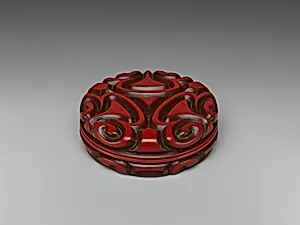
明 雕漆剔犀劍環紋盒|Box with pommel scrolls
Unknown Artist
15th–16th century
Medium
Carved polychrome lacquer (tixi)
Dimensions
H. 1 3/8 in. (3.6 cm); Diam. 4 in. (10 cm)
Classification
Lacquer
Culture & Period
China · Ming dynasty (1368–1644)
Department
Asian Art
Museum
Metropolitan Museum of Art, New York, NY
Credit
Gift of Florence and Herbert Irving, 2015
Accession Number
2015.500.1.17a, b
Rights
Public Domain
Art Historical Context
This exquisite Ming dynasty box, titled *Box with Pommel Scrolls*, exemplifies the pinnacle of Chinese lacquer artistry from the 15th–16th century. Crafted in carved polychrome lacquer known as *tixi* (剔犀), it measures just 1⅜ inches high and 4 inches in diameter, making it a delicate treasure likely used to hold cosmetics, seals, or small valuables. The surface features intricate motifs of pommel scrolls—a stylized pattern evoking sword rings or interlocking scrolls—carved to reveal vibrant layers beneath, showcasing the era's obsession with refinement and luxury. The *tixi* technique, perfected during the Ming period (1368–1644), involved applying dozens of thin layers of lacquer in contrasting colors, then meticulously carving through them to expose the hues below. This labor-intensive process, requiring years of drying and skill, produced luminous, three-dimensional effects that mimicked jade or ivory, symbols of imperial prestige. Such boxes were status symbols among the elite, reflecting China's advancements in decorative arts amid the dynasty's cultural renaissance. Today, this gift to the Metropolitan Museum of Art from Florence and Herbert Irving invites us to marvel at Ming ingenuity—where everyday objects became canvases for extraordinary craftsmanship, bridging utility and artistry in Asia's rich heritage.