
Boy with a Lute
Frans Hals, ca. 1625
About this artwork
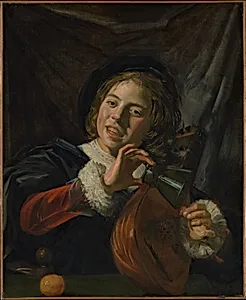
In the heart of the Dutch Golden Age, Frans Hals captures youthful charm in *Boy with a Lute* (ca. 1625), an oil-on-canvas portrait that exemplifies his mastery of lively, expressive portraiture. Hals, a leading Haarlem painter, was renowned for his loose, fluid brushwork—a departure from the stiff realism of his contemporaries—which brings a sense of immediacy and spontaneity to his subjects. This half-length depiction of a boy holding a lute reflects the era's prosperity and cultural fascination with music, where lutes symbolized refinement and leisure among the emerging middle class. The boy's direct gaze and subtle smile engage viewers, inviting us into his world amid the economic boom of the Netherlands. Hals' innovative technique, with bold strokes defining fabrics and skin tones, influenced later artists like the Impressionists. Measuring 28 3/8 x 23 1/4 inches, this intimate work highlights the intimacy of 17th-century portraiture, often commissioned to commemorate apprentices or family members. Now housed in the Metropolitan Museum of Art's European Paintings department through the 1913 bequest of Benjamin Altman, *Boy with a Lute* remains a testament to Hals' ability to infuse everyday moments with vitality, offering timeless insight into Dutch life. (198 words)