
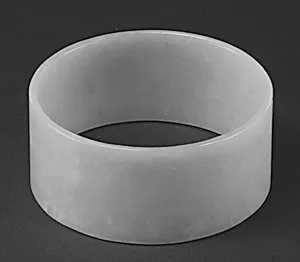
Bracelet
Unknown Artist
ca. 2400–2000 BCE
Medium
Jade (Nephrite)
Dimensions
Diam. 3 3/8 in. (8.6 cm); W. 2 in. (5.1 cm)
Classification
Jade
Culture & Period
China · Neolithic period
Department
Asian Art
Museum
Metropolitan Museum of Art, New York, NY
Credit
Charlotte C. and John C. Weber Collection, Gift of Charlotte C. and John C. Weber, 1994
Accession Number
1994.605.5
Rights
Public Domain
Art Historical Context
This elegant jade bracelet, crafted around 2400–2000 BCE during China's Neolithic period, exemplifies the's reverence for jade (nephrite), a resilient stone prized for its lustrous green hue and durability. Measuring 3⅜ inches (8.6 cm) in diameter and 2 inches5.1 cm) wide, it was likely shaped from a single block using-intensive techniques like abrasion with sandstone, as metal tools were unavailable. Such precision reflects the advanced craftsmanship of prehistoric communities. In Neolithic China, jade transcended everyday adornment to symbolize purity, status, and spiritual power. Bracelets like this were worn by elites or placed in burials, linking the living to ancestors and the cosmos. Nephrite, sourced from distant regions like the Yangzi River basin, underscores early trade networks and cultural sophistication, bridging the gap to later dynastic jade traditions. Today, this treasure from the Charlotte C. and John C. Weber Collection—gifted to the Metropolitan Museum of Art in 1994—invites visitors to touch the ancient world's ingenuity, where a simple band whispers of profound beliefs.