
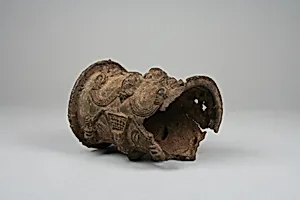
Bracelet: Figures in Relief
Unknown Artist
15th–19th century
Medium
Bronze
Dimensions
H. 4 1/4 x Diam. 3 5/8 in. (10.8 x 9.2 cm)
Classification
Metal-Ornaments
Culture
Yoruba peoples
Department
Arts of Africa, Oceania, and the Americas
Museum
Metropolitan Museum of Art, New York, NY
Credit
Gift of Dr. and Mrs. Robert J. Sayer, in memory of Dr. Milton Gross, 1979
Accession Number
1979.525.2
Rights
Public Domain
Tags
Art Historical Context
This exquisite bronze bracelet, crafted by Yoruba peoples between the 15th and 19th centuries, showcases the mastery of West African metalworkers. Adorned with human figures in relief, it a wearable 4¼ inches high and 3⅝ inches in diameter, likely serving as both personal adornment and a symbol of status or spiritual significance. The Yoruba, renowned for their rich artistic traditions in what is now Nigeria and Benin, produced such ornaments amid flourishing kingdoms like Ife and Oyo, where metalwork reflected deep cultural and religious beliefs. The bracelet's bronze medium highlights advanced lost-wax casting techniques, a hallmark of Yoruba metallurgy that allowed for intricate detailing of the relief figures—possibly representing ancestors, deities, or communal ideals. These stylized human forms embody the Yoruba aesthetic of elongated proportions and expressive poses, blending functionality with symbolism in everyday and ritual life. Housed in The Metropolitan Museum of Art's Department of the Arts of Africa, Oceania, and the Americas, this piece—gifted in 1979—offers visitors a tangible link to Yoruba heritage, inviting reflection on how wearable art bridged the physical and spiritual worlds across centuries.