
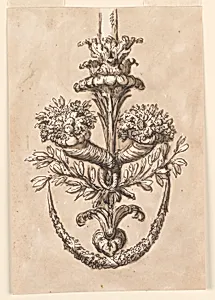
Bracket
1746–1809
Classification
metalwork
Department
Smithsonian Collection
Museum
Smithsonian American Art Museum
Credit
Museum purchase through gift of various donors and from Eleanor G. Hewitt Fund
Accession Number
1938-88-2013
Rights
Public Domain
About this artwork
Research in Progress
Art Historical Context
Giuseppe Barberi, an Italian artist active from 1746 to 1809, crafted this elegant *Bracket* during the late 18th century, a period when neoclassical influences were reshaping European design. As a piece of metalwork, it likely served as a decorative support for architecture, furniture, or interiors, exemplifying the exquisite craftsmanship of Italian artisans. Barberi's work often blended classical motifs with refined ornamentation, reflecting the era's fascination with antiquity amid the Enlightenment's emphasis on symmetry and proportion. Though the specific medium remains unidentified and research is ongoing, such brackets were prized for their functional beauty—propping shelves, cornices, or cabinetry while adding sculptural flair. Acquired through museum purchase with gifts from various donors and the Eleanor G. Hewitt Fund, this artifact now graces the Smithsonian American Art Museum's collection, bridging Italian mastery with American appreciation for historical imports. Its presence highlights how 18th-century metalwork transcended utility, becoming a canvas for artistic expression and cultural exchange. Visitors can ponder its untold stories, awaiting further scholarly insights.