
Bracteate
Unknown Artist
6th century (?)
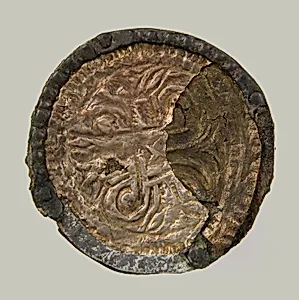
Medium
Gold, copper alloy core, remnants of iron pin
Dimensions
Overall: 1 x 3/8 in. (2.6 x 0.9 cm)
Classification
Metalwork-Gold
Culture
Frankish
Department
Medieval Art
Museum
Metropolitan Museum of Art, New York, NY
Credit
Gift of J. Pierpont Morgan, 1917
Accession Number
17.192.21
Rights
Public Domain
Art Historical Context
This exquisite Frankish bracteate, a tiny gold medallion the 6th century), exemplifies the masterful metalwork of early medieval Europe. Measuring just 1 x 3/8 inches (2.6 x 0.9 cm), it features a delicate gold sheet over a copper alloy core, remnants of an iron pin suggesting it was worn as a pendant or brooch. Such bracteates were prestige items, crafted with fine hammering techniques to create thin, shimmering disks that caught the light, symbolizing wealth and status among Frankish elites during the Migration Period. In the turbulent post-Roman world, the Franks emerged as a dominant force in what is now France and Germany, blending Germanic traditions with Christian influences. This artifact, housed in the Metropolitan Museum of Art's Medieval Art department (gift of J. Pierpont Morgan, 1917), offers a glimpse into their sophisticated craftsmanship. Bracteates often bore symbolic motifs—though specifics here are unnoted—their portability made them ideal for warriors or nobility, possibly serving amuletic purposes against misfortune. Its survival underscores the enduring allure of Migration-era goldwork, where even minuscule objects packed cultural punch, bridging pagan mysticism and emerging medieval artistry. A true treasure for visitors pondering the roots of European heritage!