
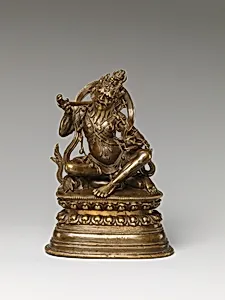
Brahmarupa Mahakala
Unknown Artist
17th century
Medium
Brass
Dimensions
H. 6 5/8 in. (16.8 cm); W. 4 3/4 in. (12.1 cm); D. 3 3/8 in. (8.6 cm)
Classification
Sculpture
Culture
Tibet
Department
Asian Art
Museum
Metropolitan Museum of Art, New York, NY
Credit
Purchase, Friends of Asian Art Gifts, 2007
Accession Number
2007.1
Rights
Public Domain
Tags
Art Historical Context
Nestled in the Metropolitan Museum of Art's Asian Art collection, this 17th-century Tibetan brass sculpture depicts Brahmarupa Mahakala, a manifestation of the Buddhist protector deity Mahakala Carved in the round and standing just 6⅝ inches tall, its compact form (16.8 cm high, 12.1 cm wide, 8.6 cm deep) suggests it designed for personal devotion, perhaps as a portable altar piece or amulet for a monk or lay practitioner. Acquired through the Friends of Asian Art in 2007, it exemplifies the exquisite metalwork of Tibet during a period of flourishing Buddhist art under regional patronage. In Tibetan Vajrayana Buddhism, Mahakala serves as a wrathful dharmapala, or guardian of the dharma, embodying the transformative power of enlightened energy. The Brahmarupa form, often portrayed with multiple arms and a dynamic pose, symbolizes the deity's ability to vanquish ignorance and obstacles. This sculpture's brass medium—likely cast using the intricate lost-wax technique—highlights Tibetan artisans' mastery of repoussé and chasing, where details like fierce expressions, jewelry, and ritual implements were meticulously hammered and engraved for spiritual potency. Such deities remind visitors of Buddhism's tantric traditions, where terrifying iconography paradoxically conveys compassion, subduing inner demons to aid enlightenment. A testament to anonymous craftsmanship, this piece invites contemplation of Tibet's enduring artistic legacy.