
Bread
Unknown Artist
ca. 1479–1458 B.C.
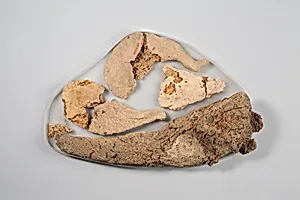
Medium
Bread
Dimensions
l. 12 cm (4 3/4 in)
Classification
Food, bread
Period
New Kingdom
Department
Egyptian Art
Museum
Metropolitan Museum of Art, New York, NY
Credit
Rogers Fund, 1927
Accession Number
27.3.511a, b
Rights
Public Domain
Tags
Art Historical Context
Step into the daily life of ancient Egypt with this remarkably preserved loaf of bread, dating to around 1479–1458 B.C. during the New Kingdom's Dynasty 18. Crafted by an unknown baker, this 12 cm-long artifact—simply titled *Bread*—is a rare edible survivor from the reign of pharaohs like Hatsheut or Thutmose III. Acquired by the Metropolitan Museum of through the Rogers Fund in 1927, it now resides in the Egyptian Art department, bridging the gap between archaeology and everyday existence. Made primarily from emmer wheat or barley flour mixed with water and fermented naturally, the bread was likely shaped by hand and baked in clay ovens fueled by dung or straw. Its compact, elongated form reflects practical techniques honed over millennia, ensuring it could sustain laborers on grand projects like the temples of Karnak. In a culture where bread was the staff of life—often called "the bones of Osiris"—this loaf held profound symbolic weight, used in rituals, offerings to gods, and tomb provisions for the afterlife. Though not a painted masterpiece, its "artistic" value lies in its authenticity: a tangible link to pharaonic diets, baking innovations, and social structures. Visitors marvel at how such humble fare fueled an empire's ambitions, reminding us that history's greatest stories were nourished by the simplest sustenance.