
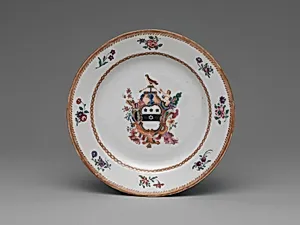
Bread Plate
Unknown Artist
1785–90
Medium
Porcelain
Dimensions
Diam. 6 1/4 in. (15.9 cm)
Classification
Bread plate
Culture
Chinese, for American market
Department
The American Wing
Museum
Metropolitan Museum of Art, New York, NY
Credit
Bequest of James T. Woodward, 1910
Accession Number
10.149.102
Rights
Public Domain
Tags
Art Historical Context
This delicate bread plate, crafted in China for the American market between 5 and 1790, exemplifies the height of early trans-Pacific trade luxury. Made of fine porcelain with a diameter of just ¼ inches, it features hand-painted motifs of birds, flowers, a prominent coat of arms—likely a personalized family crest commissioned by a wealthy American patron. Such export wares were highly prized in the young United States, arriving via clipper ships from Canton during a post-Revolutionary boom in Chinese imports. Porcelain's translucency and durability made it ideal for tableware, blending Eastern artistry with Western tastes. The intricate enameling technique allowed vibrant, detailed designs that captured nature's elegance alongside heraldic symbols of status. This piece reflects cultural exchange: Chinese potters adapted motifs to suit American elites furnishing their homes with sophisticated dining services. Today, housed in The Metropolitan Museum of Art's American Wing through the bequest of James T. Woodward in 1910, it offers a tangible link to 18th-century global commerce and the aspirational lifestyles of early Americans. A charming survivor of everyday elegance!