
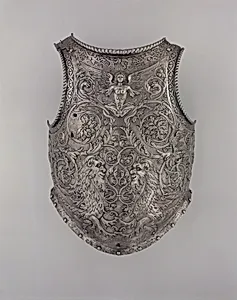
Breastplate
ca. 1540–45
Medium
Steel, gold
Dimensions
H. 23 1/4 in. (59.1 cm); W. 16 3/8 in. (41.6 cm)
Classification
Armor Parts-Breastplates
Culture
Italian, Milan
Department
Arms and Armor
Museum
Metropolitan Museum of Art, New York, NY
Credit
Gift of William H. Riggs, 1913
Accession Number
14.25.1855
Rights
Public Domain
Tags
About this artwork
This exceptional steel and gold breastplate represents the pinnacle of Italian Renaissance armor craftsmanship, created by Giovan Paolo Negroli around 1540-45 in Milan. The Negroli family workshop revolutionized armor design by incorporating classical antiquarian motifs inspired by ancient Roman art. This breastplate is inscribed "IO PAVLVS DE NEGROLIS ME FECIT," making it Giovan Paolo's only signed piece of extraordinary documentary importance. During the second quarter of the sixteenth century...
Art Historical Context
Step into the world of Renaissance Milan with this stunning steel and gold breastplate, crafted by master armorer Giovan Paolo Negroli around1540–45. about 23 inches tall, this piece from the Metropolitan Museum of Art's Arms and Armor collection exemplifies the Negroli family's revolutionary approach to armor. Unlike purely functional gear, it transforms protection into high art, drawing inspiration from ancient Roman motifs like the sphinx to evoke classical grandeur. What makes this breastplate extraordinary is its rare inscription—"IO PAVLVS DE NEGROLIS ME FECIT"—marking it as Giovan Paolo's only signed work, offering invaluable historical insight. During the 16th century's second quarter, Italian armorers elevated their craft to celebrate humanist ideals, supplying elite courts across Europe. The Negroli workshop pioneered "heroic armor," blending sculpture-like forms with supreme technical skill in forging, chasing, and gilding. This masterwork bridges warfare and artistry, showcasing Renaissance virtuosity where metalworkers rivaled painters and sculptors. Its gold accents and intricate details not only dazzled wearers but also embodied the era's fusion of beauty, power, and antiquity—a true pinnacle of Milanese ingenuity.