
Brigandine Plate
Unknown Artist
1400–1450
Medium
Iron alloy, copper alloy
Dimensions
H. 9 9/16 in. (24.3 cm); W. 7 11/16 in. (19.5 cm); Wt. 1 lb. 2.9 oz. (535.8 g)
Classification
Armor Parts
Culture
Italian
Department
Arms and Armor
Museum
Metropolitan Museum of Art, New York, NY
Credit
Bashford Dean Memorial Collection, Bequest of Bashford Dean, 1928
Accession Number
29.150.90w
Rights
Public Domain
Art Historical Context
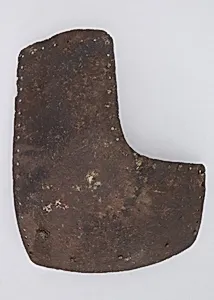
This exquisite Brigandine Plate, crafted in Italy between 1400 and 1450, offers a glimpse into the ingenuity of late medieval armorers. Measuring just 9 9/16 inches high and weighing a mere 1 pound 2.9 ounces, this small iron alloy plate—adorned with copper alloy rivets—was designed to be sewn inside a protective garment, forming flexible brigandine armor. Popular among foot soldiers and lighter cavalry, brigandines balanced mobility with defense during the turbulent Hundred Years' War era and Italy's fractious city-states conflicts. The use of iron alloy for the core plate ensured durability against slashes and thrusts, while the copper alloy elements provided both structural reinforcement and subtle decoration, a hallmark of Italian craftsmanship. These plates were often hidden beneath fabric, making brigandine a practical choice for non-noble warriors, democratizing high-quality protection. Now part of the Metropolitan Museum of Art's Bashford Dean Memorial Collection, this artifact highlights the evolution from heavy chainmail to modular plate designs, paving the way for Renaissance armor innovations. Visitors, imagine a mercenary slipping this lightweight defense under his doublet—history's unsung engineering marvel!