
Broad Collar
Unknown Artist
ca. 1479–1425 B.C.
Medium
Gold, carnelian, obsidian, glass
Dimensions
H. 24 cm (9 7/16 in.); W. 38 cm (14 15/16 in.)
Classification
Broad Collar, necklace, falcon terminals
Period
New Kingdom
Department
Egyptian Art
Museum
Metropolitan Museum of Art, New York, NY
Credit
Fletcher Fund, 1926; Purchase, Frederick P. Huntley Bequest, 1958; Joseph Pulitzer Bequest, 1966
Accession Number
26.8.59a
Rights
Public Domain
Tags
Art Historical Context
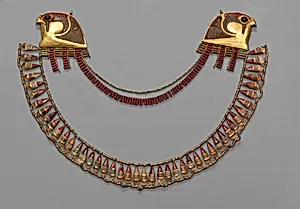
This stunning **Broad Collar**, dating to Egypt's New Kingdom (ca. 1479–1425 B.C.) during the prosperous Dynasty 18, exemplifies the era's mastery of opulent jewelry. Crafted by an unknown artist, this ceremonial necklace measures an impressive 24 cm high and 38 cm wide, to drape dramatically over the shoulders. Such collars were prized status symbols, often adorning royalty, deities, or mummies in funerary rites, symbolizing protection, fertility, and divine favor amid the pharaohs' golden age of empire-building under rulers like Thutmose III. Fashioned from gleaming gold interspersed with vibrant carnelian (red jasper-like stones evoking blood and vitality), glossy obsidian (black for contrast and mystery), and colorful glass— an innovative Egyptian invention for affordable luxury—the collar features meticulously arranged beads and falcon motifs. Falcons, sacred to the sky god Horus, underscore themes of kingship and eternal vigilance, with techniques like granulation and inlay showcasing jewelers' precision without modern tools. Housed in the Metropolitan Museum of Art's Egyptian Art department, this piece (acquired through generous funds including the Fletcher Fund) transports us to a world where art bridged the mortal and divine, reminding visitors of ancient Egypt's enduring love for color, symbolism, and splendor.