
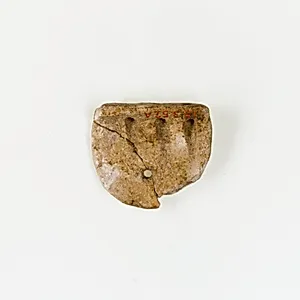
Broad Collar piece (?)
Unknown Artist
ca. 1850–1640 B.C.
Medium
Faience
Dimensions
H. 2 cm (13/16 in.)
Classification
Broad Collar piece (?)
Period
Middle Kingdom
Department
Egyptian Art
Museum
Metropolitan Museum of Art, New York, NY
Credit
Rogers Fund, 1915
Accession Number
15.3.52a
Rights
Public Domain
Art Historical Context
This delicate *Broad Collar piece*, dating to the late Middle Kingdom (ca. 1850–1640 B.C.), offers a glimpse into ancient Egypt's masterful jewelry traditions during Dynasties 12–13. Broad collars were iconic status symbols—wide necklaces of colorful beads worn by elites, priests, and even royalty for ceremonies, burials, or as rewards from pharaohs. Though only 2 cm high, this fragment likely formed part of such a lavish adornment, evoking the era's renewed artistic vigor after the Old Kingdom's pyramids. Crafted from faience—a glazed composite of quartz, lime, and clay—this piece shines with the medium's signature turquoise-blue hue, mimicking precious stones like lapis lazuli or turquoise at a fraction of the cost. Egyptian artisans shaped and fired it to create a vibrant, durable glaze that symbolized life and rebirth, perfect for eternity in the afterlife. Faience's accessibility democratized beauty, appearing in tombs from grand pyramids to modest burials. Acquired through the Rogers Fund in 1915, this artifact from the Metropolitan Museum of Art's Egyptian collection highlights the Middle Kingdom's innovative craftsmanship and cultural reverence for ornamentation that bridged the earthly and divine.