
Broadsword
Unknown Artist
late 17th century–early 18th century
Medium
Steel, shagreen
Dimensions
L. 41 1/2 in. (105.4 cm); L. of blade 35 1/2 in. (90.2 cm); W. 5 in. (12.7 cm); D. 4 1/2 in. (11.4 cm); Wt. 1 lb. 12 oz. ( 793.8 g)
Classification
Swords
Culture
Italian
Department
Arms and Armor
Museum
Metropolitan Museum of Art, New York, NY
Credit
Gift of William H. Riggs, 1913
Accession Number
14.25.1071
Rights
Public Domain
Art Historical Context
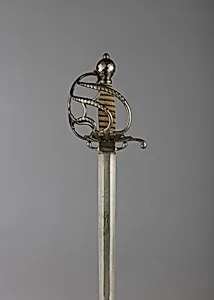
This elegant Italian broadsword, forged in the late 17th early 18th century exemplifies the masterful craftsmanship of Europe's arms makers during a time of shifting warfare and elaborate dueling culture. Measuring an imposing 41½ inches overall with a 35½-inch steel blade, it was designed for powerful slashing and thrusting, its 5-inch width and 1 lb. 12 oz. weight ensuring balance and lethality in skilled hands. Italian swordsmiths were renowned for their precision, blending functionality with subtle artistry amid the Baroque era's opulent martial traditions. The blade's polished steel gleams with the era's advanced metallurgy, while the shagreen—a textured, sharkskin-like leather—covers the hilt for a secure, grippy hold, enhancing both utility and aesthetic appeal. Such swords were status symbols for nobility and officers, reflecting Italy's pivotal role in European arms production, from Milanese workshops to Venetian arsenals. A generous gift from William H. Riggs in 1913, this broadsword now graces the Metropolitan Museum of Art's Arms and Armor Department, inviting visitors to ponder the blend of beauty and brutality in historical combat.