
Brocade
Unknown Artist
16th century
Medium
Silk and metal wrapped thread; brocaded
Dimensions
Textile: L. 71 1/2 in. (181.6 cm) W. 27 in. (68.6 cm)
Classification
Textiles-Brocades
Department
Islamic Art
Museum
Metropolitan Museum of Art, New York, NY
Credit
Rogers Fund, 1908
Accession Number
08.109.25
Rights
Public Domain
Tags
Art Historical Context
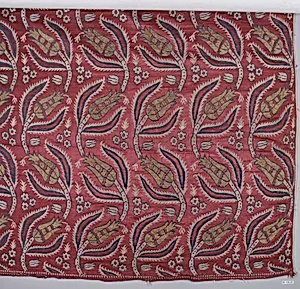
Step into the lavish world of 16th Islamic textiles with *Brocade*, a example of woven luxury from the Metropolitan Museum of Art Islamic Art collection. This panel, measuring 71½ inches long and 27 inches wide, features silk woven with metal-wrapped threads a brocading technique. Brocading involves supplementary wefts that float over the ground weave to create raised, shimmering patterns—often floral motifs here, evoking the paradisiacal gardens celebrated in Islamic art and poetry. Crafted anonymously by skilled artisans, likely in a major weaving center of the Ottoman or Safavid empires, this textile exemplifies the era's pinnacle of opulence. Metal threads, typically gold or silver wrapped around silk cores, caught the light to mimic jewelry, making such pieces ideal for elite garments, turbans, or ceremonial hangings. Acquired through the Rogers Fund in 1908, it survives as a testament to the technical virtuosity and aesthetic refinement of Islamic craftsmen, who blended functionality with breathtaking beauty. Today, *Brocade* invites us to appreciate how textiles were not just fabric, but cultural treasures—symbols of status, piety, and artistry that bridged courts and mosques across the Islamic world.