
Bronze and amber fibula (safety pin)
Unknown Artist
7th century BCE
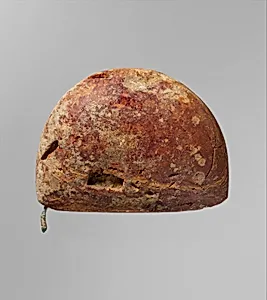
Medium
Amber
Dimensions
Other: 5 3/4 in. (14.6 cm)
Classification
Miscellaneous-Amber
Culture & Period
Etruscan or Italic · Geometric
Department
Greek and Roman Art
Museum
Metropolitan Museum of Art, New York, NY
Credit
Fletcher Fund, 1926
Accession Number
26.60.40
Rights
Public Domain
Art Historical Context
This exquisite bronze and amber fibula, dating to the 7th century BCE hails from Etruscan Italic culture during the Geometric. Resembling a modern safety pin but far more ornate, fibulae like this one were essential fasteners for clothing, such as cloaks or tun, in ancient Italy. Measuring 5 3/4 inches (14.6 cm), it exemplifies the craftsmanship of pre societies, where the Etruscans thrived as skilled metalworkers and traders, bridging Greek influences with local Italic traditions. Amber, a rare and prized material sourced from Baltic shores, adds a golden glow and luxurious touch to the bronze structure, highlighting advanced techniques in carving and inlaying organic resins. In the Geometric era, such jewelry often featured simple, bold patterns symbolizing status and protection. This piece, acquired through the Fletcher Fund in 1926, offers a glimpse into daily elite life, where personal adornments blended utility with artistry. Now housed in the Metropolitan Museum of Art's Greek and Roman Art department, it invites us to ponder the vibrant world of ancient Italy, where amber's warm luster evoked the sun and sea.