
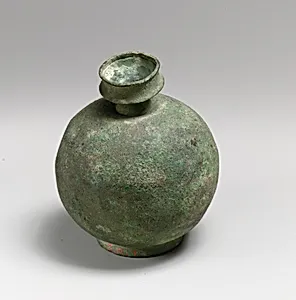
Bronze aryballos
Unknown Artist
1st–2nd century CE
Medium
Bronze
Dimensions
H. 3 in. (7.6 cm)
Classification
Bronzes
Culture & Period
Roman · Imperial
Department
Greek and Roman Art
Museum
Metropolitan Museum of Art, New York, NY
Credit
Purchase, 1900
Accession Number
00.13.1
Rights
Public Domain
Art Historical Context
Nestled in the Metropolitan Museum of Art's Greek Roman Art collection, this petite bronze aryballos from the Roman Imperial period (1st2nd century CE) the everyday elegance of ancient life. Standing just 3 inches (7.6 cm) tall, this flask-like vessel was designed for holding perfumed oils or cosmetics, a practical luxury item often used by athletes, bathers, or those tending to personal grooming rituals in the bustling Roman world. Aryballoi, with roots in earlier Greek pottery traditions, were adapted by Romans into durable bronze forms through sophisticated lost-wax casting techniques. This allowed for intricate detailing and a smooth, lustrous finish that highlighted the metal's prestige—bronze was prized for its corrosion resistance and symbolic value, bridging utility and artistry. Acquired by the Museum through purchase in 1900, it offers a tangible glimpse into Imperial Rome's refined domestic culture, where even small objects reflected Hellenistic influences and the era's emphasis on hygiene and sensory pleasures. Though the artist remains unknown, the aryballos's compact form and material choice underscore the Romans' mastery of metallurgy, transforming a simple container into a cultural artifact that whispers of ancient vanities and vitality.