
Bronze helmet of Chalcidian type
Unknown Artist
5th–4th century BCE
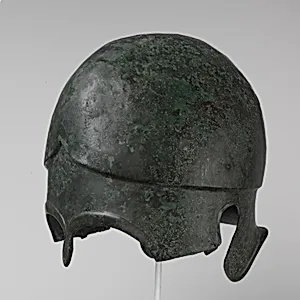
Medium
bronze
Dimensions
H. 9 1/2 in. (24.1 cm) Width: 7 3/4 in. (19.7 cm) Depth 9 3/4 in. (24.8 cm)
Classification
Bronzes
Culture & Period
Greek · Classical
Department
Greek and Roman Art
Museum
Metropolitan Museum of Art, New York, NY
Credit
Bequest of Bill Blass, 2002
Accession Number
2003.407.2
Rights
Public Domain
Tags
Art Historical Context
This striking Bronze Helmet of Chalcidian type hails from the Classical Greek period (5th–4th century), a golden age of innovation in warfare and artistry. Crafted from durable bronze, it measures about 9½ inches high, with a width of 7¾ inches and depth of ¾ inches—perfectly proportioned for a hoplite warrior's head. Unlike heavier, fully enclosing Corinthian helmets, the Chalcidian design features a distinctive open-face style with flared cheekpieces and a low dome, offering superior visibility and breathability on the battlefield. Named after the ancient Greek region of Chalcis in Euboea, these helmets were favored by elite fighters during pivotal conflicts like the Persian Wars and Peloponnesian War. They symbolized the disciplined phalanx formations that defined Greek military prowess, blending functionality with aesthetic appeal through smooth, hammered bronze surfaces that might have once gleamed with polish or inlays. The unknown artisan's skill in bronze-working—likely involving sheet metal hammering and riveting—highlights the technical mastery of Classical metallurgy. Today, this helmet graces the Greek and Roman Art department at The Metropolitan Museum of Art, thanks to the generous bequest of fashion icon Bill Blass in 2002. It invites us to imagine the clamor of ancient battlefields and the valor of those who wore it, a timeless testament to Greek ingenuity.