
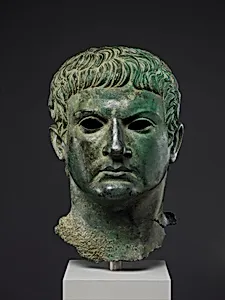
Bronze portrait of a man
Unknown Artist
1st half of 1st century CE
Medium
Bronze
Dimensions
H. 12 3/8 in. (31.4 cm)
Classification
Bronzes
Culture & Period
Roman · Early Imperial, Julio-Claudian
Department
Greek and Roman Art
Museum
Metropolitan Museum of Art, New York, NY
Credit
Rogers Fund, 1914
Accession Number
14.130.2
Rights
Public Domain
Tags
Art Historical Context
This striking bronze portrait of a man crafted in the first half of the 1st century CE during Rome's Early Imperial Julio-Claudian period, captures the essence of Roman portraiture at its peak. Dating to era of emperors like Augustus and Tiberius, it reflects the cultural emphasis on individualized likenesses, often used to honor elites, ancestors, or public figures in homes, temples, or forums. Measuring 12⅜ inches (31.4 cm) high, its intimate scale suggests it was designed for private devotion or display, embodying the Roman value of *verism*—a hyper-realistic style rooted in Republican traditions but softened with imperial idealism. Bronze was a luxurious medium for such sculptures, cast likely via the lost-wax technique, which allowed for intricate details in the man's facial features, hair, and drapery. Fewer than 1% of ancient bronzes survive today, as most were melted down for reuse, making this piece a rare window into Roman artistry. Acquired through the Rogers Fund in 1914, it now graces the Metropolitan Museum of Art's Greek and Roman Art department, inviting us to ponder the anonymous subject's identity—perhaps a statesman, philosopher, or family patriarch—frozen in eternal contemplation.