
Bronze tweezers
Unknown Artist
ca. 2900–1050 BCE
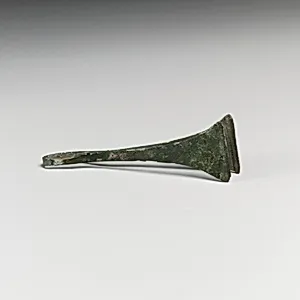
Medium
Bronze
Dimensions
L. 3 3/16 in. (8.1 cm)
Classification
Bronzes
Culture & Period
Minoan · Early Minoan II-Late Minoan III
Department
Greek and Roman Art
Museum
Metropolitan Museum of Art, New York, NY
Credit
Bequest of Richard B. Seager, 1926
Accession Number
26.31.468
Rights
Public Domain
Art Historical Context
This delicate pair of bronze tweezers, from around 2900–1050 BCE, offers a glimpse into the everyday lives of the Minoan people of ancient Crete. Crafted during the Earlyan II to Late Mino III periods, these tools exemplify the Minoans' mastery of bronze metallurgy—an alloy of copper and tin that marked a technological leap in the Bronze Age, enabling stronger, more durable implements than earlier copper ones. Measuring just 3 3/16 inches (8.1 cm) long, their slim, functional design highlights the precision of Minoan craftsmanship. Minoan society, flourishing on Crete with grand palaces like Knossos, was renowned for its advanced culture, vibrant frescoes, and sophisticated trade networks across the Mediterranean. Personal grooming items like these tweezers suggest a people attuned to hygiene and aesthetics, possibly used for plucking hairs or handling small tasks in rituals or daily routines. Though the artist remains unknown, such bronzes reflect the era's artistic emphasis on utility blended with elegance. Now housed in the Metropolitan Museum of Art's Greek and Roman Art Department, this piece was bequeathed by Richard B. Seager in 1926. It invites visitors to ponder the human touches in ancient worlds, bridging millennia through a simple yet ingenious object.