
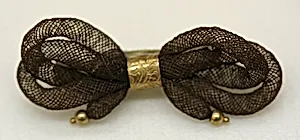
Brooch
Unknown Artist
1850–69
Medium
hair, metal
Classification
Brooch
Culture
American
Department
Costume Institute
Museum
Metropolitan Museum of Art, New York, NY
Credit
Gift of Mrs. John C. Cattus, in memory of her mother, Mrs. William Gordon Ver Planck, 1948
Accession Number
C.I.48.5.7
Rights
Public Domain
Art Historical Context
Nestled in the Metropolitan Museum of Art's Costume Institute, this delicate brooch from 1850–69 exemplifies sentimental jewelry traditions of mid-19th-century America. Crafted by an unknown artist from hair and metal, it reflects the Victorian era's fascination with personal mementos. During this period, locks of hair from loved ones—often the deceased—were meticulously woven, braided, or shaped into intricate designs, encased in gold or silver frames. These pieces served as wearable memorials, blending craftsmanship with deep emotional resonance. The brooch's creation aligns with a peak in hairwork popularity, fueled by high mortality rates and a culture of mourning rituals influenced by European trends. American women, in particular, excelled in this domestic art form, producing everything from brooches to elaborate wreaths without formal training. Its gift to the Met by Mrs. John C. Cattus in memory of her mother, Mrs. William Gordon Ver Planck, in 1948, underscores its enduring legacy as a family heirloom. Today, this artifact invites us to ponder the intimate ways 19th-century Americans preserved bonds beyond death, transforming ephemeral hair into lasting symbols of love and loss. A poignant reminder of personal history amid grand collections.