
Brooch
ca. 1850–70
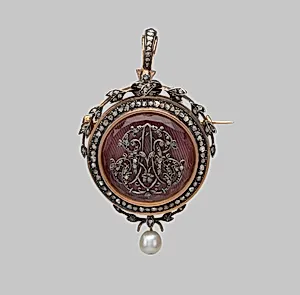
Medium
Gold, diamonds, crystal, silk
Dimensions
2 1/2 × 1 1/2 in. (6.4 × 3.8 cm)
Classification
Metalwork-Gold and Platinum|Jewelry
Culture
French, Paris
Department
European Sculpture and Decorative Arts
Museum
Metropolitan Museum of Art, New York, NY
Credit
Gift of Mrs. Alfred Schermerhorn, in memory of Mrs. John Gerard Coster, 1946
Accession Number
46.101.6a, b
Rights
Public Domain
Art Historical Context
This elegant brooch, crafted by the Parisian jeweler Dumoret 1850–70, exemplifies the opulence of Second Empire France, a time when Paris reigned as the world's capital of goods. During Napoleon III's era, jewelry became a symbol of wealth and sophistication, blending fine craftsmanship with the era's romantic revival styles. At just 2½ × 1½ inches, this petite piece was designed for a lady's gown or shawl, reflecting the fashionable accessory trends among the elite. Fashioned from gold, sparkling diamonds, translucent crystal, and delicate silk, the brooch showcases masterful metalworking techniques typical of Paris's renowned ateliers. The intricate use of gemstones and silk suggests innovative textural contrasts, creating a jewel that caught the light and complemented the voluminous crinolines of the day. Dumoret's work highlights the technical prowess of French jewelers, who set global standards for precision and beauty in goldsmithing. A generous gift to The Metropolitan Museum of Art in 1946 from Mrs. Alfred Schermerhorn, in memory of Mrs. John Gerard Coster, this brooch preserves a slice of 19th-century Parisian glamour. It invites visitors to appreciate how wearable art bridged fashion, artistry, and social status in Victorian-era Europe.