
Brooch in the Form of a Dog Attacking a Boar
Unknown Artist
2nd century
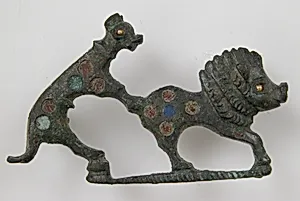
Medium
Champlevé enamel, bronze, gold
Dimensions
Overall: 1 3/16 x 1 15/16 x 7/16 in. (3 x 5 x 1.1 cm)
Classification
Enamels-Champlevé
Culture
Roman
Department
Medieval Art
Museum
Metropolitan Museum of Art, New York, NY
Credit
Gift of J. Pierpont Morgan, 1917
Accession Number
17.192.148
Rights
Public Domain
Tags
Art Historical Context
This exquisite 2nd-century Romanoch, shaped as a dynamic dog attacking a boar, captures thrill of the hunt in miniature form. Measuring just 1 3/16 x 1 15/16 x 7/16 inches, it as a functional jewelry pin, likely adorning cloaks or tunics of the elite. Crafted during the height of the Roman Empire, pieces reflect the era's fascination with wildlife motifs, where boars symbolized ferocity and dogs loyalty—common themes in mosaics, reliefs, and everyday adornments. The brooch's brilliance comes from champlevé enamel, a sophisticated technique where channels were carved into a bronze base, filled with powdered glass enamels in vibrant hues, and fired to fuse them. Traces of gold enhance the details, showcasing Roman mastery of mixed media for durable, colorful jewelry. This method, bridging ancient and medieval enameling traditions, allowed for vivid storytelling on a tiny scale, making luxury accessible yet prestigious. Today, this treasure—gifted to the Metropolitan Museum of Art by J. Pierpont Morgan in 1917—invites us to marvel at Roman ingenuity. Imagine pinning it on during a festival, its fierce scene sparking conversations about bravery and the wild frontiers of empire. A perfect emblem of artistry in motion!