
Brush Holder
19th century
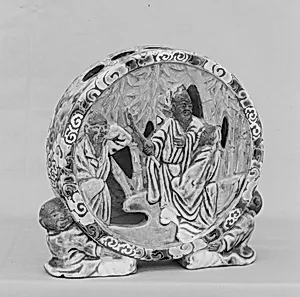
Medium
Clay covered with polychrome enamels (Kyoto ware, Awata type)
Dimensions
H. 5 1/2 in. (14 cm); Diam. 5 7/8 in. (14.9 cm)
Classification
Ceramics
Culture & Period
Japan · Edo (1615–1868) or Meiji period (1868–1912)
Department
Asian Art
Museum
Metropolitan Museum of Art, New York, NY
Credit
Gift of Mr. and Mrs. Samuel Colman, 1893
Accession Number
93.1.174
Rights
Public Domain
Tags
Art Historical Context
This exquisite brush holder, crafted by the potter Hozan in19th-century Japan, exemplifies the vibrant artistry of Kyoto ware, specifically the Awata. Made from clay coated in polychrome enamels, measures just 5½ inches high and nearly 6 inches in diameter, perfectly sized for holding calligraphy brushes on a scholar's desk. The vivid, multilayered glazes—fired over a base layer—create a dazzling array of colors, a hallmark technique of Awata pottery that flourished in Kyoto's pottery district. Dating to the late Edo period (1615–1868) or early Meiji era (1868–1912), this piece reflects Japan's rich tradition of functional ceramics elevated to decorative splendor. Brush holders like this were essential tools in the literati culture, where calligraphy and ink painting symbolized refinement and intellectual pursuit. The motifs, likely featuring male figures as suggested by its tags, add narrative charm, possibly evoking scholars or everyday scenes amid the era's artistic boom. A gift to the Metropolitan Museum of Art from Mr. and Mrs. Samuel Colman in 1893, this Hozan work showcases how Kyoto potters blended utility with opulent enameling, bridging everyday life and high art in Japan's ceramic heritage.