
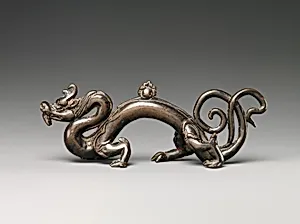
Brush rest in the shape of a dragon
Unknown Artist
15th century
Medium
Bronze
Dimensions
H. 2 1/8 in. (5.4 cm); W. 6 7/8 in. (17.5 cm); D. 1 1/2 in. (3.8 cm)
Classification
Sculpture
Culture & Period
China · Ming dynasty (1368–1644)
Department
Asian Art
Museum
Metropolitan Museum of Art, New York, NY
Credit
Purchase, Friends of Asian Art Gifts, 2017
Accession Number
2017.131
Rights
Public Domain
Tags
Art Historical Context
This exquisite bronze brush rest, crafted in the shape of a sinuous dragon during China's Ming dynasty (13681644), served a practical yet elegant purpose in the scholar's studio. Measuring just over 2 inches high and 7 inches wide, its compact form allowed calligraphers and painters to rest their brushes horizontally, preventing ink from dripping and preserving the tools essential to literati culture. The dragon motif—curled dynamically with scales, claws, and an open maw—transforms a utilitarian object into a symbol of imperial power and auspicious fortune. Dating to the 15th century, this piece reflects the Ming era's mastery of bronze casting, likely achieved through intricate piece-mold techniques that captured fine details in the metal's patinated surface. Dragons held profound cultural significance in Chinese art, embodying the emperor's divine authority and protective benevolence, often adorning scholarly items to invoke scholarly success and harmony. Such wenfangsihe (literati studio objects) highlight the refined tastes of the educated elite amid the dynasty's artistic renaissance. Acquired by The Metropolitan Museum of Art in 2017 through the Friends of Asian Art, this rare sculpture invites visitors to appreciate the blend of functionality, symbolism, and technical virtuosity in Ming craftsmanship.