
Buckle
Unknown Artist
ca. 409–711
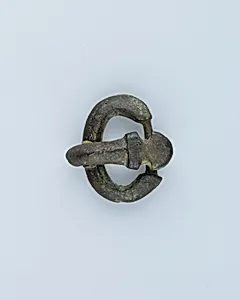
Medium
Bronze
Dimensions
H. 1 1/4 in. (3.2 cm); W. 1 1/4 in. (3.2 cm); thickness 1/2 in. (1.3 cm); Wt. 0.8 oz. (21 g)
Classification
Miscellaneous-Buckles & Ornament
Culture
Visigothic
Department
Arms and Armor
Museum
Metropolitan Museum of Art, New York, NY
Credit
Gift of Bashford Dean, 1920
Accession Number
20.152.23
Rights
Public Domain
Art Historical Context
This exquisite bronze buckle, crafted by an unknown Visigothic artisan 409–711 CE, a glimpse into the daily life and craftsmanship of the Visigoths, a Germanic people who established a kingdom spanning Spain and southern France after the fall of Rome. Measuring just 1¼ inches square and weighing a mere 0.8 ounces, its compact form belies its practical role as a belt fastener, likely adorning clothing, straps, or even sword belts in the Arms and Armor tradition. Displayed in the Metropolitan Museum of Art thanks to a 1920 gift from Bashford Dean, it exemplifies the transitional artistry of early medieval Europe. Bronze, a durable and versatile medium recycled from Roman precedents, was favored for such personal ornaments, allowing for intricate casting techniques that blended utilitarian function with subtle decoration. Visigothic buckles like this one highlight the culture's fusion of Germanic warrior aesthetics and Hispano-Roman influences, symbolizing status and mobility during a time of conquest and Christianization. Though small, it whispers of the era's turbulent history—from the sack of Rome to the Muslim invasion of 711—preserving the ingenuity of a vanished world for modern eyes.