
Buckle
Unknown Artist
ca. 100 BCE–ca. 500 CE
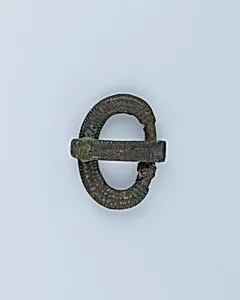
Medium
Bronze
Dimensions
H. 1 1/2 in. (3.8 cm); W. 1 1/4 in. (3.1 cm); thickness 7/16 in. (1.1 cm); Wt. 0.7 oz. (19 g)
Classification
Miscellaneous-Buckles & Ornament
Culture
Ibero-Roman
Department
Arms and Armor
Museum
Metropolitan Museum of Art, New York, NY
Credit
Gift of Bashford Dean, 1920
Accession Number
20.152.34
Rights
Public Domain
Art Historical Context
This exquisite bronze buckle, crafted by an unknown Ibero-Roman artisan around 100 BCE to 500 CE, exemplifies the fusion indigenous Iberian traditions with Roman influences in the ancient Iberian Peninsula. Measuring just1 1/2 inches high and weighing a mere 0.7 ounces, its compact form—likely part of a belt or strap—highlights the practicality of Roman provincial metalwork. Cast in durable bronze, a favored medium for its corrosion resistance and ability to capture fine details, the buckle served both functional and decorative purposes, bridging everyday utility with subtle artistry. Housed in the Metropolitan Museum of Art's Arms and Armor Department, this piece reflects the Ibero-Roman world's cultural synthesis during the late Roman Republic and Empire. Iberia, under Roman rule from the 2nd century BCE, saw local Celtic-Iberian motifs blend with imperial engineering, producing ornaments that adorned clothing, horse gear, or even military belts. Such buckles were commonplace yet reveal skilled lost-wax casting or hammering techniques, underscoring widespread craftsmanship. A generous gift from Bashford Dean in 1920, this unassuming artifact invites us to appreciate the unsung heroes of ancient life—objects that fastened societies together, quite literally, across centuries of conquest and coexistence.