
Buddha
Unknown Artist
3rd century CE
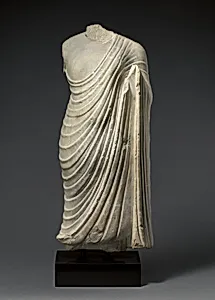
Medium
Limestone
Dimensions
H. 30 in. (76.2 cm); W. 11 in. (27.9 cm); D. 4 1/2 in. (11.4 cm); Wt. 111.3 lbs. (50.5 kg)
Classification
Sculpture
Culture & Period
South India (ancient Andhradesa, probably Nagarjunakonda) · Ikshvaku period (ca. 225–ca. 320)
Department
Asian Art
Museum
Metropolitan Museum of Art, New York, NY
Credit
Purchase, The Vincent Astor Foundation Gift, Brooke Russell Astor Bequest, The Miriam and Ira D. Wallach Foundation Fund; Fernando Family Trust Gift, in honor of Dr. Quintus and Mrs. Wimala Fernando; Vijay K. Anand, M.D., Nanda Anand, Maya Anand, and Rohit Anand, and The Estate of Mamdouha Bobst Gifts, 2016
Accession Number
2016.700
Rights
Public Domain
Tags
Art Historical Context
This serene limestone sculpture of the Buddha, standing approximately 30 inches tall, hails from 3rd-century South India, specifically the ancient region of Andhradesa—likely Nagarjunakondaduring the Ikshv period (ca. 225–ca. 320 CE). Carved from durable limestone, a favored medium in early Andhra for its workability and longevity, the figure exemplifies the region's burgeoning Buddhist art tradition. Its substantial weight of over 110 pounds underscores the craftsmanship involved in creating such a solid, monumental form. The Ikshvaku dynasty, ruling from Andhra, was a key patron of Buddhism, fostering sites like Nagarjunakonda as vibrant centers of worship and artistic innovation. This Buddha likely served in a monastic or stupa context, embodying the enlightened teacher's calm presence through idealized proportions and subtle detailing typical of Early Andhra style—bridging northern influences with local vitality. Acquired by the Metropolitan Museum of Art in 2016 through generous gifts, this rare survivor offers a window into South India's pivotal role in Buddhism's spread, highlighting how regional dynasties shaped the faith's visual language for devotees.