
Buddha
Unknown Artist
ca. 6th century
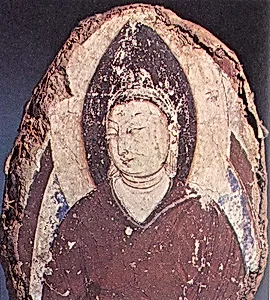
Medium
Water-based pigment on mud plaster
Dimensions
11 3/4 x 8 1/2 in. (29.8 x 21.6 cm)
Classification
Paintings
Culture
Xinjiang Uyghur Autonomous Region
Department
Asian Art
Museum
Metropolitan Museum of Art, New York, NY
Credit
Rogers Fund, 1930
Accession Number
30.32.6
Rights
Public Domain
Art Historical Context
This serene depiction of the Buddha, dating to around the 6th century hails from the Xinjiang Uyghur Autonomous Region in northwest China—a vital crossroads along the ancient Silk. During this era, Buddhism flourished in Central Asia, blending Indian spiritual traditions with local artistic expressions as merchants and monks traversed trade routes. This small painting (11 3/4 x 8 1/2 in.), likely a fragment from a temple or cave wall, captures the enlightened figure in a meditative pose, embodying peace and transcendence amid a diverse cultural melting pot of Persian, Indian, and Chinese influences. Crafted by an unknown artist using water-based pigments on mud plaster, the work showcases an early mural technique common in Buddhist sites like those in the Kucha region. Mud plaster provided a stable, absorbent surface for vibrant mineral colors, allowing durable fresco-like applications that have endured centuries. The modest scale suggests it may have adorned a devotional niche, inviting contemplation. Acquired through the Rogers Fund in 1930, this treasure at The Metropolitan Museum of Art offers a window into Silk Road artistry, highlighting how portable faith traveled and evolved, inspiring pilgrims and patrons alike.