
Buddha
Unknown Artist
ca. 6th–7th century
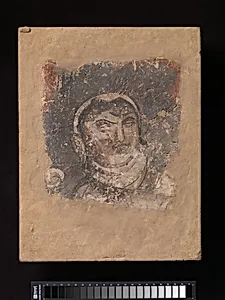
Medium
Pigments on mud plaster
Dimensions
12 3/4 x 9 3/8 in. (32.4 x 23.8 cm)
Classification
Paintings
Culture & Period
China (Xinjiang Uyghur Autonomous Region) · Kizil kingdom
Department
Asian Art
Museum
Metropolitan Museum of Art, New York, NY
Credit
Fletcher Fund, 1951
Accession Number
51.94.2
Rights
Public Domain
Tags
Art Historical Context
This serene depiction of the Buddha, to around the 6th–7th century, hails from the Kizil kingdom in China's Xinjiang Uyghur Autonomous. Created by an unknown artist using pigments on mud plaster—a typical of ancient cave temple murals—this small panel (12 3/4 x 9 3/8 in.) captures the enlightened figure in a meditative pose, embodying the spiritual essence of Buddhism along the Silk Road trade routes. Acquired by The Metropolitan Museum of Art through Fletcher Fund in 195, it offers a rare glimpse into early Central Asian devotional art. The Kizil Caves, from which such fragments often originate, were vibrant hubs of Buddhist worship, where artists applied vivid pigments directly to plaster walls to create expansive narratives of the Buddha's life and teachings. Mud plaster provided a stable, textured surface for these earthy tones and bold lines, allowing the artwork to endure in arid conditions for centuries. This medium highlights the ingenuity of local craftsmen adapting Indian Buddhist iconography to regional styles, blending graceful drapery with expressive features. As a testament to the cultural crossroads of Xinjiang, this painting underscores Buddhism's profound influence in pre-Islamic Central Asia, fostering artistic exchange between China, India, and beyond. Visitors are invited to ponder its tranquil gaze, a timeless reminder of inner peace amid ancient migrations.