
Buddha
Unknown Artist
9th–10th century
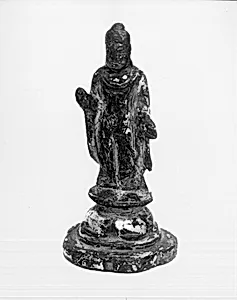
Medium
Gilt bronze
Dimensions
H. 2 in. (5.1 cm)
Classification
Sculpture
Culture & Period
Korea · Unified Silla dynasty (676–935)
Department
Asian Art
Museum
Metropolitan Museum of Art, New York, NY
Credit
Rogers Fund, 1917
Accession Number
17.118.47
Rights
Public Domain
Tags
Art Historical Context
This exquisite gilt bronze sculpture of the Buddha, crafted by an unknown artist during Korea's Unified Silla dynasty676–935), dates to the 9th–10th century Standing just 2 inches (5.1 cm) tall, it exemplifies the refined artistry of this golden age, when Buddhism flourished as the dominant faith and inspired some of Korea's most elegant metalwork. Acquired through the Rogers Fund in 1917, it now graces the Asian Art collection at the Metropolitan Museum of Art. The use of gilt bronze—a technique involving a mercury-gold amalgam fired onto a bronze core—creates a radiant golden sheen, symbolizing the Buddha's enlightenment and divine purity. This labor-intensive process highlights Silla artisans' mastery of lost-wax casting and gilding, producing durable yet portable devotional objects ideal for personal worship or amulets. In Unified Silla society, such intimate sculptures bridged the spiritual and everyday, reflecting Buddhism's deep integration into Korean culture. This serene figure invites contemplation, embodying the era's pursuit of harmony and transcendence.