
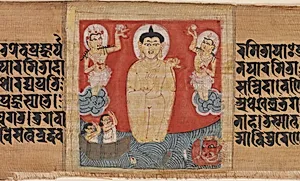
Buddha Giving Safety (Abhayananda) to Mariners, Leaf from a Dispersed Pancavimsatisahasrika Prajnapramita
Unknown Artist
ca. 1090
Medium
Ink and color on palm leaf
Dimensions
H. 2 1/4 in. (5.7 cm); L. 22 1/8 in. (56.2 cm)
Classification
Paintings
Culture & Period
India (Bengal) or Bangladesh · Pala period
Department
Asian Art
Museum
Metropolitan Museum of Art, New York, NY
Credit
Purchase, Francis M. Weld Gift, 1952
Accession Number
52.93.1
Rights
Public Domain
Tags
Art Historical Context
This exquisite palm-leaf manuscript folio, titled *Buddha Giving Safety (hayananda) to*, dates to around 1090 during India's Pala period (8th–12th century). Created by an unknown artist in Bengal (or possibly modern Bangladesh), it forms part of a dispersed *Pancavimsatisahasrikarajnaparamita*—a key Buddhist sutra extolling the "Perfection of Wisdom." The scene captures the Buddha in a protective gesture (abhaya mudra, or "fearlessness"), safeguarding seafarers amid boats and attendant deities, symbolizing compassion and divine intervention over perilous waters. Palm-leaf manuscripts like this were a pinnacle of Pala artistry, where texts were incised with a stylus, inked, and vividly painted in mineral colors. The narrow format (just 2¼ inches high, over 22 inches long) allowed stacking for portability, reflecting South Asian scribal traditions. Pala painters excelled in delicate line work and stylized figures with elongated forms, blending narrative illustration with spiritual devotion amid a flourishing Buddhist culture before its regional decline. Housed at the Metropolitan Museum of Art, this leaf highlights the Pala school's role in preserving Mahayana Buddhism through illuminated texts, offering timeless reassurance to travelers—then and now.