
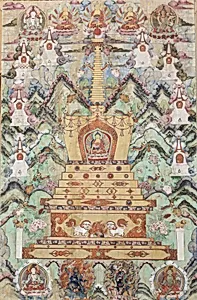
Buddha Within a Stupa
Unknown Artist
16th–17th century
Medium
On silk (?) canvas
Dimensions
37 1/2 x 24 in. (95.3 x 61 cm)
Classification
Paintings
Culture
Tibet
Department
Asian Art
Museum
Metropolitan Museum of Art, New York, NY
Credit
Rogers Fund, 1930
Accession Number
30.76.286
Rights
Public Domain
Tags
Art Historical Context
Nestled in the Metropolitan Museum of Art's Asian Art collection, *Buddha Within a Stupa* is a captivating 16th–17th century Tibetan painting on silk (or possibly canvas), measuring 37½ x 24 inches. Created by an unknown artist, this work exemplifies the devotional artistry of Tibetan Buddhism, where images like this served as aids for meditation and worship. The central motif—a serene Buddha figure enshrined within a multi-tiered stupa—evokes the sacred architecture of Buddhist reliquaries, symbolizing the path to enlightenment and the cosmos itself. Stupas, dome-shaped monuments often adorned with guardian figures like lions (prominently featured here), represent the Buddha's physical remains and spiritual essence. In Tibetan culture during this era, such paintings were integral to temple rituals and personal altars, blending intricate iconography with vibrant colors to guide viewers toward spiritual insight. Lions, as fierce protectors, flank the composition, underscoring themes of safeguarding the Dharma. Acquired through the Rogers Fund in 1930, this artwork highlights the Met's commitment to preserving Himalayan treasures. Its delicate silk medium allowed for luminous pigments and fine details, making it a window into Tibet's rich artistic heritage amid a period of flourishing Buddhist patronage.