
隋 石雕胁侍立像|Buddhist attendant (possibly Kasyapa)
Unknown Artist
late 6th–7th century
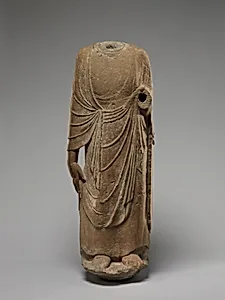
Medium
Sandstone with traces of pigment
Dimensions
H. 39 in. (99.1 cm); W. 14 1/2 in. (36.8 cm)
Classification
Sculpture
Culture & Period
China · Sui (581–618) or Tang (618–907) dynasty
Department
Asian Art
Museum
Metropolitan Museum of Art, New York, NY
Credit
Gift of Ernest Erickson Foundation, 1985
Accession Number
1985.214.144
Rights
Public Domain
Tags
Art Historical Context
This striking sandstone sculpture depicts a Buddhist attendant, possibly the revered monk Mahakasyapa—one of the Buddha's closest disciples known for his ascetic wisdom—standing in serene devotion. Carved during the late 6th to 7th century in China, amid the Sui dynasty (581–618) or early Tang (618–907), it measures 39 inches tall and captures the transitional artistry of a pivotal era. The Sui briefly reunified China after centuries of division, fostering a boom in Buddhist patronage that influenced grand cave temples and imperial art. Expertly hewn from sandstone, the figure's flowing robes and gentle posture reveal masterful carving techniques, with subtle drapery folds suggesting movement and life. Traces of original pigments hint at its once-vibrant polychromy, a common practice in early Chinese Buddhist sculpture to evoke divine realism and accessibility for worshippers. Such attendant figures (known as *xie shi*) flanked main deities in temples, symbolizing the supportive monastic community. Housed in the Metropolitan Museum of Art's Asian Art department since a 1985 gift from the Ernest Erickson Foundation, this piece offers a window into Buddhism's cultural dominance in medieval China, blending spiritual devotion with artistic innovation. Visitors, pause to admire its quiet poise—a testament to enduring faith.