
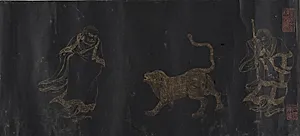
Buddhist Scroll: The Eighteen Luohans
Medium
Handscroll; gold on black paper
Dimensions
10 1/2 x 151 1/4 in. (26.7 x 384.2 cm)
Classification
Paintings
Culture & Period
China · Ming (1368–1644) or Qing dynasty (1644–1911)
Department
Asian Art
Museum
Metropolitan Museum of Art, New York, NY
Credit
Anonymous Gift, 1947
Accession Number
47.136.2
Rights
Public Domain
Tags
Art Historical Context
Behold the *Buddhist Scroll: Eighteen Luohans*, captivating handscroll from China's Ming (1368–4) or Qing (1644–1911), now housed in the Metropolitan Museum of Art's Art collection. Measuring an impressive 10½ x 151¼ inches, painting unfolds like a sacred narrative, rendered in shimmering gold on black paper—a rare and luminous technique that evokes the otherworldly glow of enlightenment against a void-like backdrop. The unidentified artist, sometimes attributed to the renowned Song-dynasty master Li Gonglin, masterfully captures the eighteen Luohans (arhats), Buddha's enlightened disciples revered as protectors of the Dharma. In Chinese Buddhist tradition, these figures embody wisdom, compassion, and supernatural powers, often depicted with attendant animals symbolizing their virtues or realms. The handscroll format, a hallmark of classical Chinese painting, invites slow, meditative viewing, mirroring the spiritual contemplation it inspires. Gold pigment on black paper not only highlights the Luohans' serene expressions and dynamic poses but also underscores themes of transcendence, making this work a profound artifact of devotional art. This anonymous 1947 gift preserves a slice of imperial China's rich fusion of artistry and faith, blending meticulous linework with symbolic depth to draw viewers into the timeless world of Buddhism.