
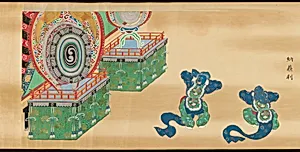
Bugaku Scroll
Unknown Artist
17th century
Medium
Handscroll from set of two; ink, color, and gold on paper
Dimensions
14 3/8 in. x 55 ft. 8 3/8 in. (36.5 x 1697.7 cm)
Classification
Paintings
Culture & Period
Japan · Edo period (1615–1868)
Department
Asian Art
Museum
Metropolitan Museum of Art, New York, NY
Credit
Seymour Fund, 1957
Accession Number
57.52.2
Rights
Public Domain
Tags
Art Historical Context
Welcome to the enchanting world of the *Bugaku Scroll*, a 17th-century handscroll from Japan's Edo period (16151868). This exquisite work, part of a set of two, captures the rhythmic elegance of bugaku—ancient court dances performed by men in elaborate costumes. Unfurling over an astonishing 55 feet, it immerses viewers in a procession of dancers frozen in dynamic poses, evoking the grandeur of imperial performances that blended Japanese tradition with influences from China and Korea. Crafted by an unknown artist using ink, vibrant colors, and shimmering gold on paper, the scroll exemplifies the refined techniques of Japanese painting. The lavish use of gold flecks and layered pigments creates a sense of opulence and movement, typical of handscrolls (emakimono) designed for private contemplation or ceremonial viewing. These formats allowed sequential revelation of scenes, heightening narrative drama. Housed in the Metropolitan Museum of Art's Asian Art Department since 1957, this treasure highlights Edo Japan's cultural reverence for classical arts amid a booming urban era. Its monumental scale and vivid depiction of male dancers offer a rare glimpse into the ceremonial splendor of bugaku, a UNESCO-recognized intangible heritage still performed today.