
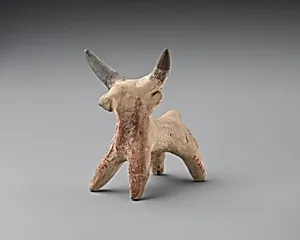
Bull figurine
Unknown Artist
ca. 600–480 BCE
Medium
Terracotta
Dimensions
H. 3 1/2 in. (8.9 cm)
Classification
Terracottas
Culture & Period
Cypriot · Cypro-Archaic II
Department
Greek and Roman Art
Museum
Metropolitan Museum of Art, New York, NY
Credit
The Cesnola Collection, Purchased by subscription, 1874–76
Accession Number
74.51.1763
Rights
Public Domain
Tags
Art Historical Context
This charming terracotta bull figurine standing just 3 1/2 inches (8.9 cm) tall, hails from ancient Cyprus during the Cypro-Aric II period (ca. 600–480 BCE). Craft by an unknown artist, exemplifies the island's vibrant tradition of small-scale sculptures, often produced in workshops for everyday devotion. Terracotta, fired clay that was abundant and affordable, allowed Cypriot artisans to create these lively votive offerings—placed in sanctuaries to honor deities or seek blessings—making art accessible beyond elites. Bulls held profound cultural symbolism in Cypriot society, evoking power, fertility, and the divine, possibly linked to local cults or Near Eastern influences blending with emerging Greek styles. Hand-modeled with simple, expressive forms, the figurine captures the animal's sturdy stance and muscular form, highlighting the period's shift toward more naturalistic figures amid Cyprus's role as a Mediterranean crossroads. Acquired through The Cesnola Collection at the Metropolitan Museum of Art, this piece offers a window into Cypro-Archaic life, where such figurines bridged the human and sacred worlds. A delightful survivor from over 2,500 years ago, it reminds us of ancient reverence for nature's might.