
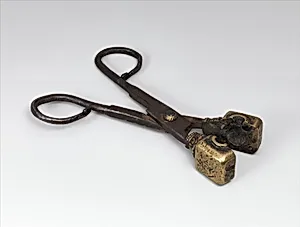
Bullet Mold
Unknown Artist
17th–19th century
Medium
Iron, brass
Dimensions
L. 5 3/4 in. (14.5 cm); W. 2 3/4 in. (7 cm); Wt. 6.3 oz. (178.6 g)
Classification
Firearms Accessories
Culture
Himalayan, possibly Tibetan, Nepalese, or Bhutanese
Department
Arms and Armor
Museum
Metropolitan Museum of Art, New York, NY
Credit
Purchase, Kenneth and Vivian Lam Gift, 2009
Accession Number
2009.105
Rights
Public Domain
Art Historical Context
This compact **Bullet Mold**, crafted from durable iron and gleaming brass, hails from the Himalayan region—possibly Tibetan, Nepalese, Bhutanese—and dates to 17th–19th centuries. Measuring just ¾ inches long and weighing a mere 6.3 ounces, its portable design speaks to the practical needs of warriors or hunters in rugged mountain terrains. The two-part mold would have been used to cast lead bullets for early firearms, a testament to the fusion of metallurgy and weaponry in this era. In the Metropolitan Museum of Art's Arms and Armor Department, this artifact illuminates the spread of gunpowder technology across Asia. As firearms evolved from matchlocks to flintlocks in the Himalayas, such molds became essential tools, blending functionality with skilled craftsmanship. The choice of iron for strength and brass for corrosion resistance highlights regional metalworking expertise, where everyday objects doubled as cultural markers of innovation and self-reliance. Acquired through the generous Kenneth and Vivian Lam Gift in 2009, this unassuming piece invites us to ponder the hidden artistry in tools of conflict, bridging history's violent chapters with the enduring ingenuity of Himalayan makers.