
Bunker Hill Monument
1875/1900
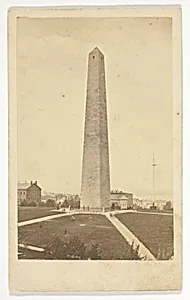
Medium
Albumen print (carte-de-visite)
Dimensions
Image: 8.9 × 5.7 cm (3 9/16 × 2 1/4 in.); Card: 10.4 × 6.4 cm (4 1/8 × 2 9/16 in.)
Classification
carte-de-visite (albumen)
Department
Photography and Media
Museum
Art Institute of Chicago
Accession Number
33500
Rights
Public Domain
Art Historical Context
Step into the past with *Bunker Hill Monument* (1875/1900), a petite yet evocative albumen print captured by photographer Allen. This carte-de-visite—a pocket-sized photograph measuring just 8.9 × 5.7 cm—depicts the iconic 67-meter granite obelisk in Boston's Charlestown, commemorating the pivotal 1775 Battle of Bunker during the American Revolution. Housed in the Art Institute of Chicago's Photography and Media Department, it exemplifies 19th-century photographic innovation. The albumen print process, using egg whites to bind light-sensitive silver salts to paper, produced the era's signature warm tones and sharp details, making images richly reproducible. Carte-de-visites exploded in popularity after 1854, evolving from portraiture to scenic views like this one, collected in albums as affordable souvenirs of American landmarks. Printed sometime between 1875 and 1900, it reflects post-Civil War patriotism, when such images stirred national pride amid Reconstruction. This unassuming card offers a window into how everyday Americans engaged with history—tucking monuments into parlors alongside celebrity portraits. Its cultural role underscores photography's democratizing power, turning grand symbols of liberty into intimate, shareable mementos.