
Busk
Unknown Artist
1675–1725
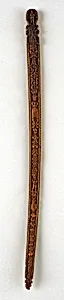
Medium
wood
Classification
Busk
Culture
Italian
Department
Costume Institute
Museum
Metropolitan Museum of Art, New York, NY
Credit
Gift of Mrs. Edward S. Harkness, 1930
Accession Number
30.135.27
Rights
Public Domain
Art Historical Context
Step into the opulent world of 17- and 18th Italian fashion with this wooden *busk*, dating from 1675–1725. A *busk* was an essential rigid insert for women's corsets, laced down the front to provide structure and support, shaping the idealized silhouette of the Baroque era. Crafted from wood—a lightweight yet durable material—this artifact from Italy's Costume Institute at The Metropolitan Museum of Art highlights ingenuity of period undergarments, blending functionality with subtle artistry. During this time, Italian tailoring influenced European courts, emphasizing elaborate gowns that required such stays to cinch the waist and lift the bust. Wood was a favored medium for busks due to its workability; artisans often carved or pierced it for decoration, though this example's precise techniques reflect skilled woodworking traditions. As a donor gift from Mrs. Edward S. Harkness in 1930, it preserves a glimpse into daily elite life, where even hidden garments underscored status and bodily discipline. Today, this unassuming object reveals the hidden architecture of historical fashion, inviting us to appreciate the craftsmanship behind the grandeur. (198 words)