
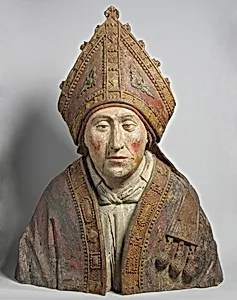
Bust of a Bishop
Unknown Artist
15th century
Medium
Wood, paint
Dimensions
Overall: 26 1/4 x 19 1/2 in. (66.7 x 49.5 cm)
Classification
Sculpture-Wood
Culture
French
Department
The Cloisters
Museum
Metropolitan Museum of Art, New York, NY
Credit
Gift of John D. Rockefeller Jr., 1937
Accession Number
37.80.14
Rights
Public Domain
Tags
Art Historical Context
This striking *Bust of a Bishop carved in the 15th century by an unknown French artist, captures the dignified presence of a high-ranking church figure. Crafted from wood and vividly painted, it measures 26¼ x 19½ inches, making it a substantial, life-like portrait ideal for a church altar or private devotion. Housed in The Cloisters at the Metropolitan Museum of Art—thanks to a 1937 gift from John. Rockefeller Jr.—this exemplifies the medieval tradition of polychrome wood carving, where paint brought stone-cold figures to vibrant life. In late medieval France, bishops symbolized spiritual authority and ecclesiastical power amid the Hundred Years' War and the Avignon Papacy's upheavals. Such busts often commemorated revered clergy, serving as focal points for prayer and veneration. The artist's skillful rendering of the bishop's robes, facial features, and serene expression reflects Gothic realism transitioning toward Renaissance naturalism, highlighting wood's versatility for intricate detailing before stone dominated larger commissions. Today, this anonymous masterpiece invites us to ponder the faces behind history's pivotal events, reminding visitors of the Church's profound cultural influence in 15th-century Europe.