
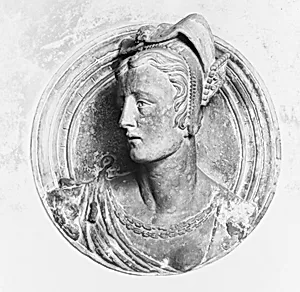
Bust of a lady in contemporary dress
Unknown Artist
ca. 1525–30 (?)
Medium
Limestone
Dimensions
Diameter: 28 in. (71.1 cm)
Classification
Sculpture
Culture
French
Department
European Sculpture and Decorative Arts
Museum
Metropolitan Museum of Art, New York, NY
Credit
Bequest of George Blumenthal, 1941
Accession Number
41.190.478
Rights
Public Domain
Tags
Art Historical Context
This elegant limestone bust, titled *Bust of a Lady Contemporary Dress*, dates to around 1525–30 and hails from France during the early Renaissance. Carved by an unknown artist its impressive 28-inch diameter makes it a substantial piece, likely intended as a medallion or relief for a wall niche or private collection. The medium of limestone allowed for smooth, detailed carving, capturing the subtle textures of the woman's attire and features with remarkable realism. Created amid France's Renaissance flowering—fueled by royal patronage under François I—this portrait reflects the era's growing emphasis on individualized likenesses. The "contemporary dress" hints at fashionable early 16th-century styles, such as layered gowns and elaborate headdresses, offering a glimpse into the lives of elite women. Such busts were prized in noble households, blending classical antiquity's idealization with lifelike portraiture. Now in the Metropolitan Museum of Art's European Sculpture and Decorative Arts collection, thanks to the 1941 bequest of George Blumenthal, this work stands as a poignant anonymous masterpiece. It invites visitors to ponder the lady's story—perhaps a patron, spouse, or muse—frozen in stone yet vividly alive.