
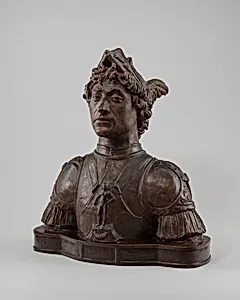
Bust of a Warrior
1850/1870
Medium
terracotta
Dimensions
overall: 62.3 x 55 x 25.9 cm (24 1/2 x 21 5/8 x 10 3/16 in.)
Classification
Sculpture
Department
CSD
Museum
National Gallery of Art, Washington, D.C.
Credit
Samuel H. Kress Collection
Accession Number
1943.4.74
Rights
Public Domain
Art Historical Context
Behold the **Bust of a Warrior a striking terracotta sculpture crafted by an imitator of Renaissance master Antonio del Pollaiuolo around 1850–1870. Measuring an imposing 62.3 x 55 x 25.9 cm, this life-sized bust captures the fierce intensity of its subject, with finely modeled features that evoke the classical warrior ideal. Terracotta, unglazed fired clay, was a favored medium for sculptors, prized for its malleability that allowed intricate detailing of anatomy, drapery, and expression—hallmarks of Pollaiuolo's innovative style. Antonio del Pollaiuolo (c. 1433–1498) revolutionized Florentine art with his precise studies of the human body, seen in dynamic bronzes like his *Hercules and Antaeus*. This 19th-century imitation reflects the era's Romantic revival of Renaissance ideals, when artists and collectors sought to recapture the grandeur of antiquity amid industrial change. The warrior's vigilant gaze and muscular form pay homage to this tradition, blending classical heroism with Pollaiuolo's anatomical realism. Generously gifted through the Samuel H. Kress Collection to the National Gallery of Art, this piece invites us to ponder the enduring allure of the warrior archetype—from ancient myths to Renaissance revival. A testament to artistic continuity, it reminds visitors of how past glories inspire the present.