
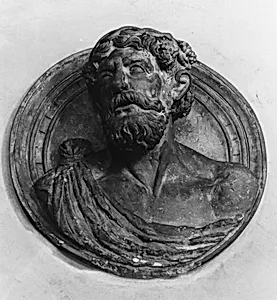
Bust of a wild man or rustic
Unknown Artist
ca. 1525–30 (?)
Medium
Limestone
Dimensions
Diameter: 29 in. (73.7 cm)
Classification
Sculpture
Culture
French
Department
European Sculpture and Decorative Arts
Museum
Metropolitan Museum of Art, New York, NY
Credit
Bequest of George Blumenthal, 1941
Accession Number
41.190.481
Rights
Public Domain
Tags
Art Historical Context
This captivating limestone bust, titled *Bust of a Wild or Rustic*, hails from France around 1525–30, a time when Renaissance sculptors were blending classical ideals with lively, expressive motifs. Carved by an unknown artist, the life-size work (29 inches in diameter) portrays a rugged male figure—possibly a mythical "wild man," a popular emblem of untamed nature and primal strength in period art, or a rustic everyman evoking rural life. Its classification as a portrait underscores the era's fascination with character studies, bridging idealization and realism. Limestone, a favored medium for French sculpture, allowed for intricate detailing and durability, often used in architectural elements like fountains or friezes. The bust's robust form and textured surface highlight the material's versatility, capturing the subject's wild hair, weathered features, and earthy vigor with skillful carving techniques typical of early 16th-century workshops. Now housed in the Metropolitan Museum of Art's European Sculpture and Decorative Arts Department, this piece entered the collection through the generous bequest of George Blumenthal in 1941. It invites visitors to ponder the cultural interplay between civilization and wilderness in Renaissance France, offering a tangible glimpse into the period's decorative imagination.