
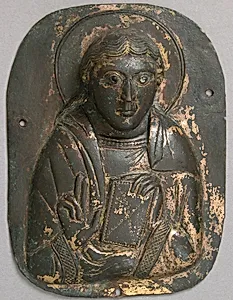
Bust of an Apostle
Unknown Artist
ca. 1120–30
Medium
Copper, gilding
Dimensions
Overall: 5 13/16 x 4 5/16 x 1 1/2 in. (14.8 x 10.9 x 3.8 cm)
Classification
Metalwork-Copper alloy
Culture
South Netherlandish
Department
Medieval Art
Museum
Metropolitan Museum of Art, New York, NY
Credit
Gift of J. Pierpont Morgan, 1917
Accession Number
17.190.792
Rights
Public Domain
Art Historical Context
This delicate *Bust of an Apostle crafted around 1120–30 in the South Netherlands, embodies the spiritual fervor of the Romanesque. Measuring just under 6 inches tall, this copper alloy sculpture captures the solemn gaze and draped robes of a holy figure, likely intended for a church altar, reliquary, or liturgical ensemble. Produced during a time when the region—modern-day Belgium—was a hub for innovative metalwork, it reflects the medieval Church's emphasis on venerated saints and apostles as intercessors between heaven and earth. The artwork's medium of copper with gilding is particularly noteworthy. Artisans skillfully hammered and chased the metal to create expressive folds and features, then applied a thin layer of gold leaf for a radiant, heavenly glow. This technique not only ensured durability but also evoked divine light, making the bust shimmer in candlelit sanctuaries. Gilding on base metals like copper democratized luxury, allowing even modest parishes to display sacred opulence. A generous gift from J. Pierpont Morgan in 1917, this piece now graces The Metropolitan Museum of Art's Medieval Art collection. It invites us to ponder the anonymous sculptor's piety and the enduring allure of 12th-century craftsmanship.