
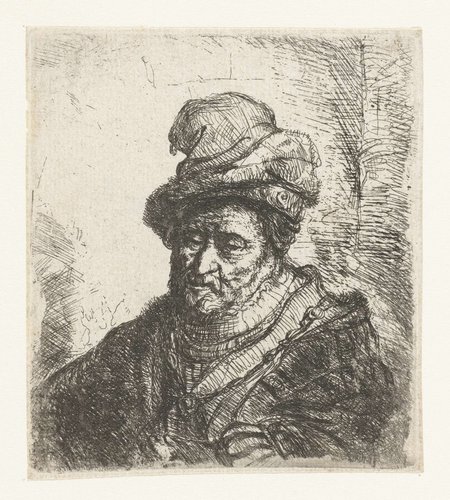
Buste van een filosoof
1635 - 1672
Medium
etching
Dimensions
94; 83
Rights
Public Domain
About this artwork
collector's mark: Lugt 2228
Art Historical Context
This delicate etching, titled *Buste van een filosoof* (Bust of a Philosopher), captures the quiet dignity of classical learning through the hand of Dutch artist Karel van der Pluym. Created sometime between 1635 and 1672, the small print—measuring just 94 by 83 millimeters—reflects the intimate scale often favored in seventeenth-century Dutch graphic work. Etching allowed artists to achieve fine lines and subtle tonal effects, making the medium ideal for portable studies and collector’s pieces that brought scholarly ideals into private homes. The subject, a philosopher rendered in bust form, evokes the enduring fascination with ancient wisdom that permeated European culture during the Dutch Golden Age. Though little is recorded about the specific figure depicted, such images served as visual reminders of intellectual pursuit and moral reflection. The presence of collector’s mark Lugt 2228 further situates the print within centuries of connoisseurship, underscoring how these modest works traveled through distinguished cabinets and libraries. Despite its modest size, the etching rewards close viewing, inviting modern audiences to appreciate both the technical precision of the medium and the timeless appeal of philosophical contemplation.
About the Artist
Karel van der Pluym · 1625–1672
Karel van der Pluym (1625–1672) occupies a fascinating position in Dutch Golden Age painting as Rembrandt's first cousin and probable pupil whose rare, refined works were sometimes passed off as Rembrandt's by unscrupulous dealers. Born in Leiden in 1625, Karel was the son of Dominicus van der Pluym and Cornelia van Suytbroeck, making him Rembrandt's first cousin through his mother. Though undocum...