
Button
Unknown Artist
ca. 1770
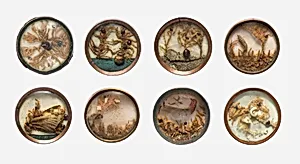
Medium
glass
Classification
Button
Culture
French
Department
Costume Institute
Museum
Metropolitan Museum of Art, New York, NY
Credit
From the Hanna S. Kohn Collection, 1951
Accession Number
50.231.213–.220
Rights
Public Domain
Art Historical Context
This delicate glass button, crafted in France around 1770, offers a glimpse into the opulent world of 18th-century. During the late Rococo period, when Versailles set the tone for European elegance, even the smallest accessories like buttons became miniature works of art. Worn on lavish garments such as waistcoats, robes à la française, or embroidered coats, these pieces transformed functional fasteners into sparkling embellishments, reflecting the era's love for luxury and refinement. Made of glass—a material prized for its clarity and versatility—the button showcases the advanced glassmaking techniques of the time. French artisans excelled in molding and polishing glass to mimic gemstones, creating affordable yet dazzling alternatives to precious metals or jewels. This example, from the Metropolitan Museum of Art's Costume Institute, highlights how everyday objects embodied cultural sophistication and social status. Generously donated as part of the Hanna S. Kohn Collection in 1951, this button preserves a tangible link to Enlightenment-era France. Though created by an unknown artist, its survival underscores the museum's mission to celebrate the artistry hidden in fashion's details—inviting us to appreciate the intricate beauty that once adorned the elite.