
Button
Unknown Artist
ca. 1775
Medium
glass, pearl, metal
Classification
Button
Culture
French
Department
Costume Institute
Museum
Metropolitan Museum of Art, New York, NY
Credit
From the Hanna S. Kohn Collection, 1951
Accession Number
51.47.1–.4
Rights
Public Domain
Tags
Art Historical Context
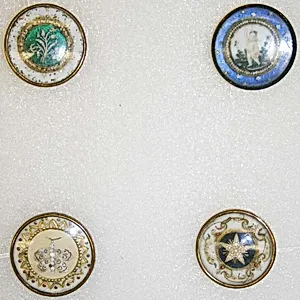
This exquisite glass, pearl, and metal button crafted in France around 1775 offers a glimpse into the opulent world of 18th-century. During the late Rococo period, just before the French Revolution, buttons like this were far more than fasteners—they were miniature jewels adorning lavish garments. Produced for the elite, such accessories showcased the era's love for playful ornamentation, transforming everyday clothing into statements of whimsy and wealth. The button's intricate motifs of Cupid, butterflies, and stars evoke the Rococo spirit: Cupid symbolizes flirtatious love, butterflies represent transformation and the soul, and stars add a celestial sparkle. Likely featuring enamel-painted glass or cut pearls set in metal, the techniques highlight French artisans' mastery of micro-scale luxury, blending transparency, luster, and fine detailing. These elements made buttons coveted collectibles, often rivaling jewelry in craftsmanship. Housed in the Metropolitan Museum of Art's Costume Institute from the Hanna S. Kohn Collection, this "Button" reminds us how fashion captured the imagination of Enlightenment-era society, where even the smallest objects brimmed with symbolic delight. A true treasure for fashion enthusiasts! (198 words)