
Button
Unknown Artist
ca. 1775
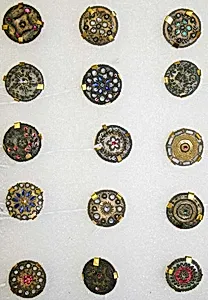
Medium
passementerie
Classification
Button
Culture
French
Department
Costume Institute
Museum
Metropolitan Museum of Art, New York, NY
Credit
From the Hanna S. Kohn Collection, 1951
Accession Number
51.47.128–.142
Rights
Public Domain
Art Historical Context
This exquisite *Button*, crafted around 1775 by an unknown French artisan, exemplifies the lavish passementerie techniques of 18th-century France. Passementerie—elaborate trimmings made from braided, woven, or knotted threads, often silk or metallic yarns—was a hallmark of luxury fashion during the late Rococo period. Far from a mere fastener, this button would have adorned high-society garments, transforming everyday clothing into statements of elegance and status. In the opulent court of Louis XVI, just before the French Revolution, such decorative elements showcased the virtuosity of specialized workshops. French passementiers employed intricate looping and twisting methods to create textured, jewel-like forms, blending artistry with functionality. This piece reflects France's dominance in haute couture, where even the smallest accessories demanded precision craftsmanship. Now part of the Metropolitan Museum of Art's Costume Institute, gifted from the Hanna S. Kohn Collection in 1951, it invites us to appreciate the unsung details of historical fashion—reminders of a world where every thread told a story of refinement and excess.