
Button
ca. 1873
Medium
Silver filigree
Classification
Metalwork-Silver
Culture
Norwegian, Christiania
Department
European Sculpture and Decorative Arts
Museum
Metropolitan Museum of Art, New York, NY
Credit
Gift of Mrs. Harriette M. Arnold, 1906
Accession Number
06.460
Rights
Public Domain
Art Historical Context
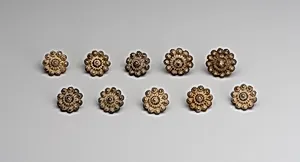
Nestled in the Metropolitan Museum of Art's European Sculpture and Decorative Arts, this exquisite *Button* by Norwegian silversmith Jacob Ulrichfeldt Tostrup, around 1873, exemplifies the of 19th-century Scandinavian metalwork. Hailing from Christiania (now Oslo), Tostrup was a master of the Tostrup family workshop, renowned for elevating everyday objects into artistic treasures. Donated in 1906 by Mrs. Harriette M., this piece highlights the era's blend of functionality and ornamentation in Norwegian decorative arts. The button's medium—silver filigree—reveals Tostrup's virtuosity in a labor-intensive technique where fine silver wires are meticulously twisted, soldered, and shaped into intricate, lace-like patterns. Filigree, with roots in ancient jewelry traditions, flourished in Norway during the 19th century as a symbol of national craftsmanship, often drawing on folk motifs amid growing cultural pride. Though small, this button would have adorned fine garments, transforming a humble fastener into a wearable work of art that speaks to the opulence of bourgeois life. Its presence in the Met underscores the global appreciation for Norwegian silver, bridging Viking-era legacies with Victorian-era innovation. Visitors are invited to marvel at how such delicate artistry captures a nation's enduring love for intricate beauty.